Only 2 of 37 non-recyclers didn’t know electronics could be recycled. We had been briefed to build an awareness campaign.
This is where the electronics actually end up.
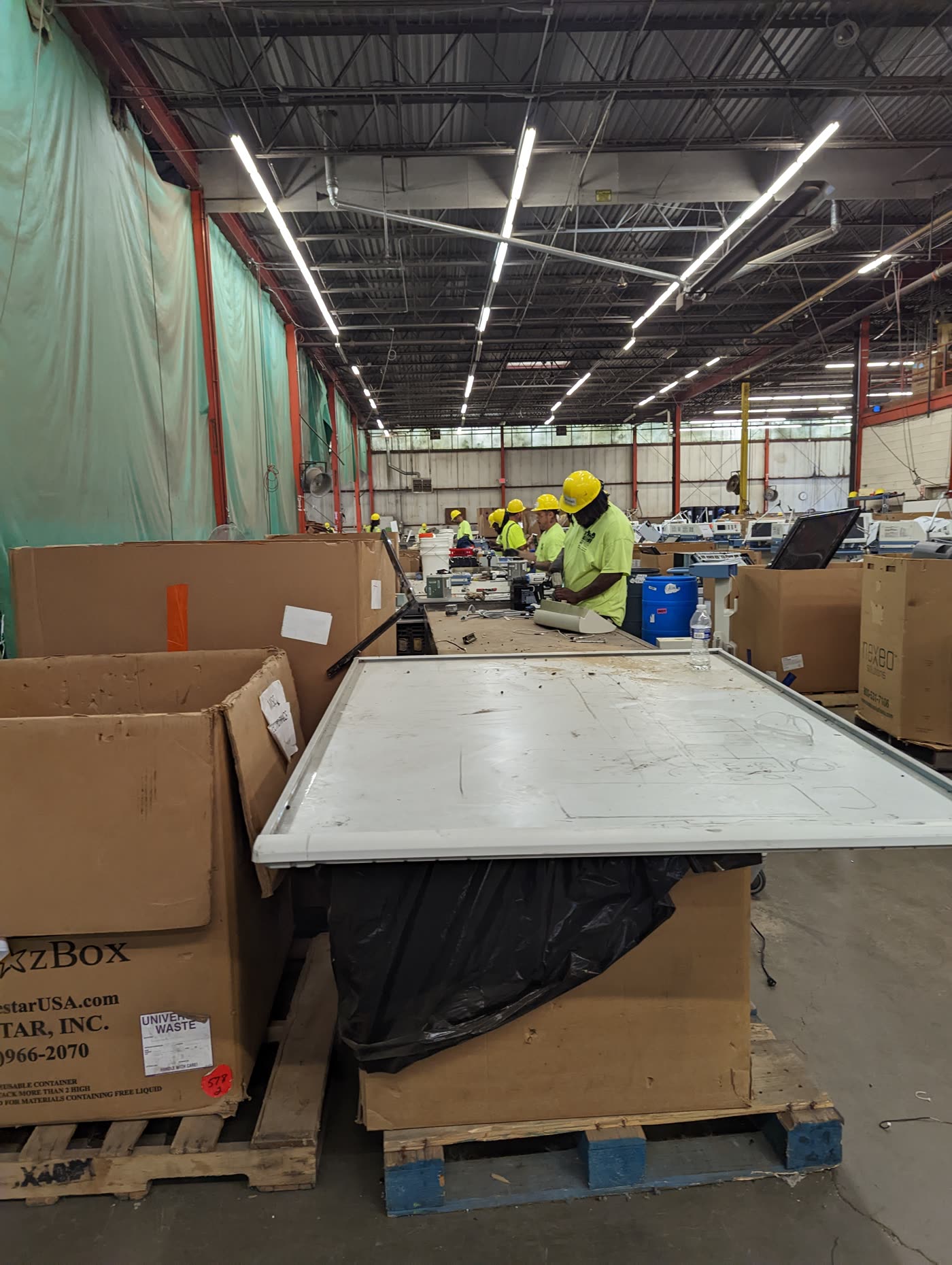
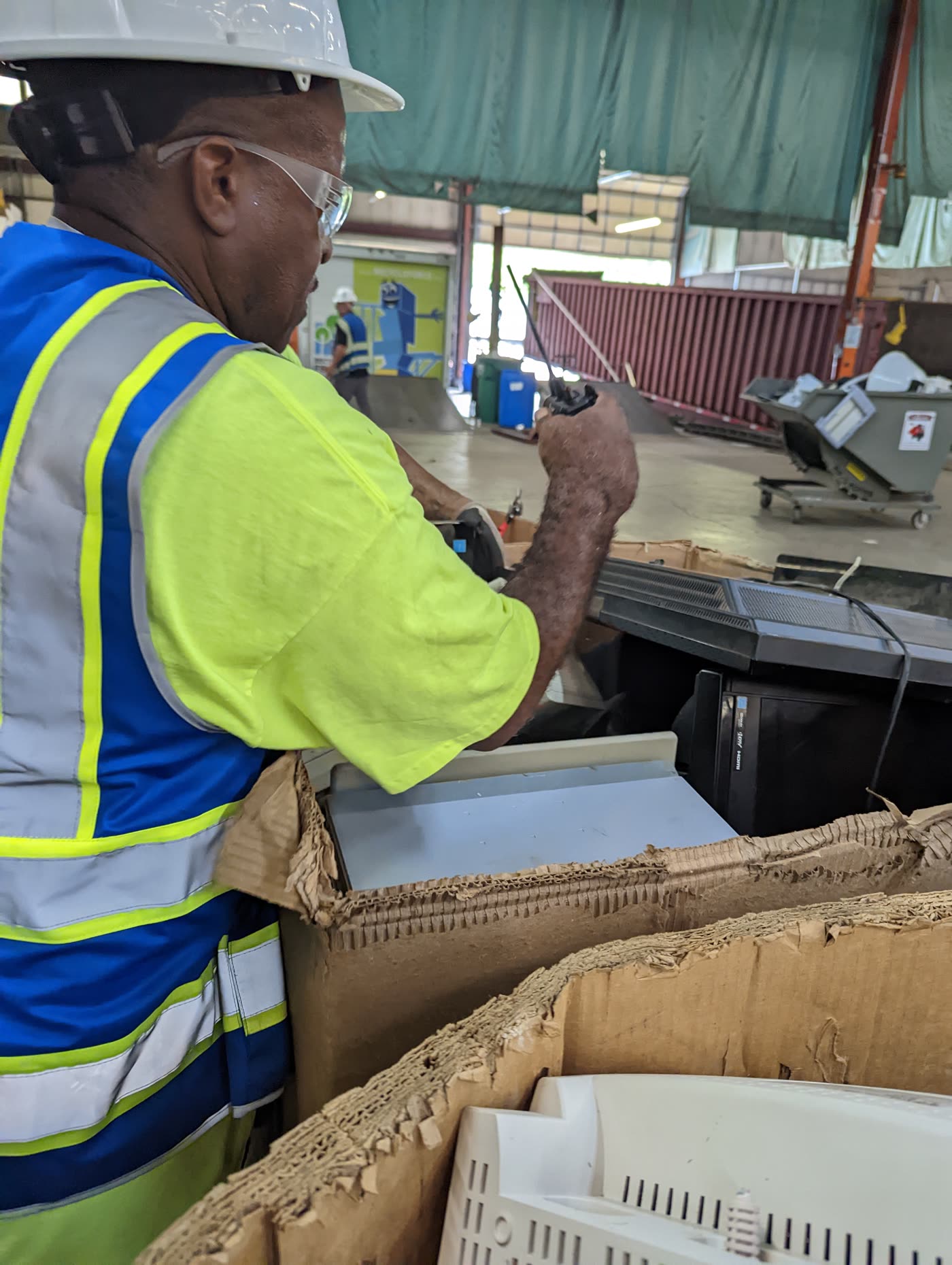
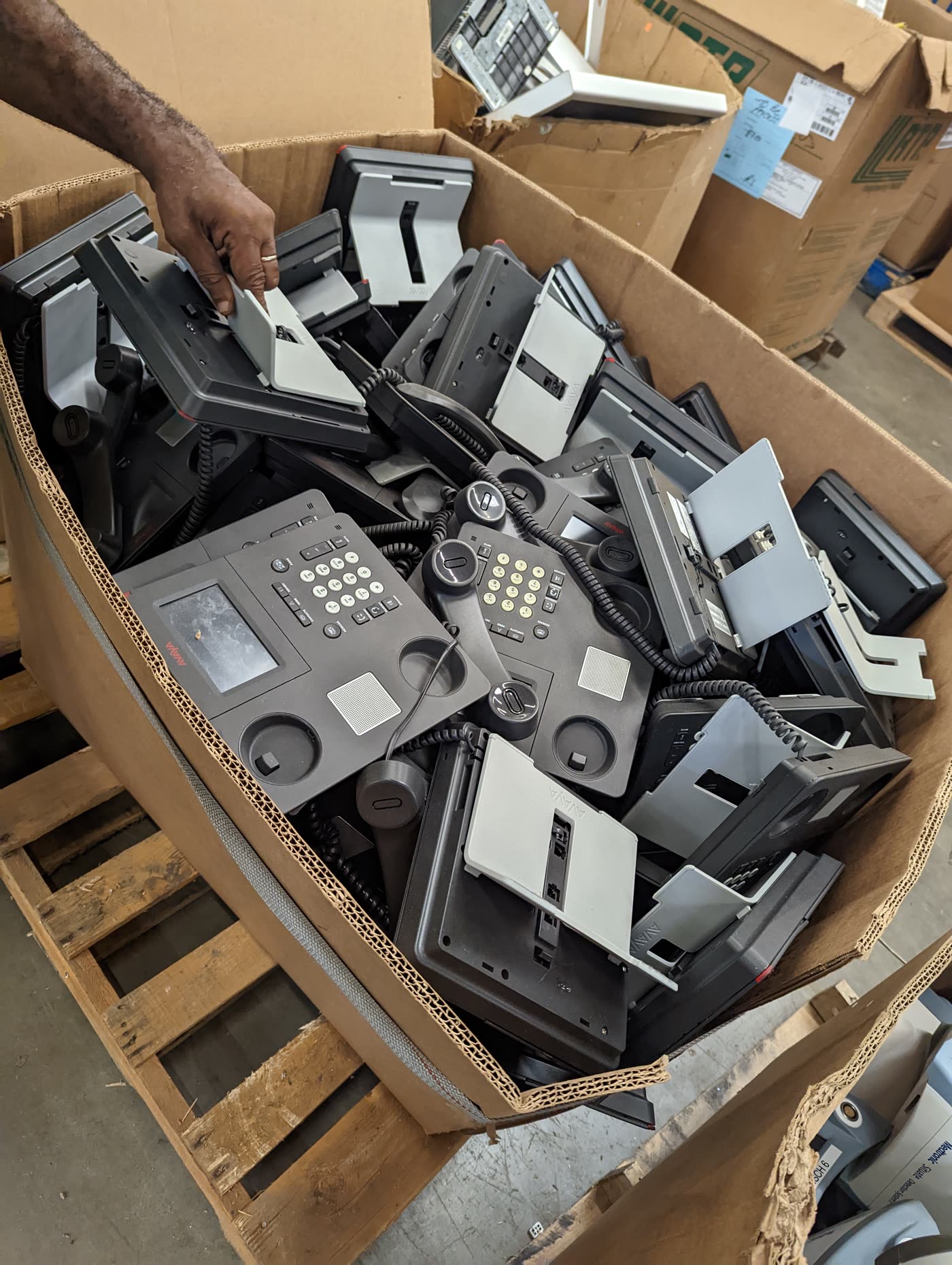
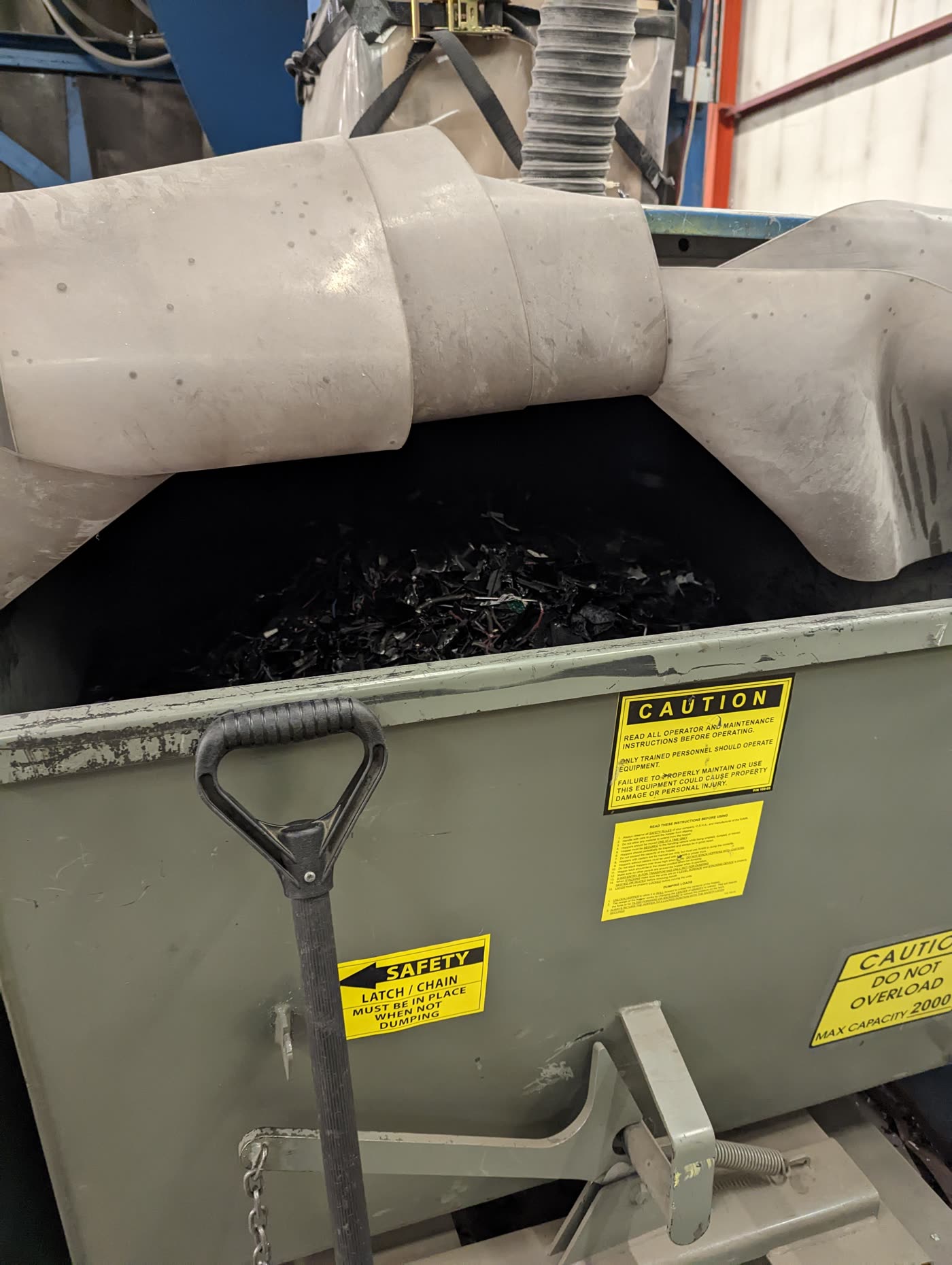
We went to the RecycleForce plant floor and a public collection event in
Indianapolis to check what people told us against what they brought in.
RecycleForce, Indianapolis · September 2022
The question underneath the brief
2of 37
Only two non-recyclers didn’t know electronics could be recycled.
Which meant the brief we were handed — an awareness campaign — would
have answered a problem almost nobody had. The question was what was stopping the
other thirty-five.
What the 37 non-recyclers actually didn’t know
One mark per survey respondent who doesn’t currently recycle
electronics.
2 didn’t know electronics could be recycled at all
35 already knew, and still didn’t
An awareness campaign speaks to the two marks on the left. An awareness campaign is
what we had been briefed to build.
The brief was design something that gets more people to recycle
electronics, which reads like an awareness problem.
It was an access problem and a clarity problem, and those need different fixes
entirely.
Why this method
A single method would have given us either scale or depth, not both. I led a 76-respondent survey
to size the problem across ages and backgrounds, while the team ran semi-structured interviews split
evenly across two generations to see whether the reasons actually differed. Then we went to where
the electronics go: a public recycling event and the RecycleForce plant floor in Indianapolis, to
check what we were hearing against what people actually brought in.
Survey, Qualtrics
Semi-structured interviews
Site observation
Affinity mapping
Thematic network analysis
Usability testing
RecycleForce, Indianapolis
On the plant floor
Public recycling event
What people actually brought in
What the survey showed
Why non-recyclers said they don’t recycle electronics
Self-reported barriers among the 37 survey respondents who don’t
currently recycle electronics.
Not many recycling centers nearby68%
Not clear what can be recycled60%
Not convenient to recycle52%
Didn’t know electronics could be recycled at all2 people
The bottom row is the one that redirected the project. If almost everyone already knows recycling
exists, a campaign that just repeats that message has nowhere to land. Access and clarity were the
real target.
Average age, working professionals
Recyclers47.6 yrs
Non-recyclers30.5 yrs
+17 years
A moderate positive correlation between age and
e-waste participation, r(74) = .46, p < .01. Younger professionals were the
least likely group to already be recycling electronics.
What the interviews explained
Lack of access, not lack of concern
Recurring across both age groups
People wanted a location and a set of rules, not a lecture. The recurring ask was strikingly
concrete: where, what hours, what’s accepted, and whether it was worth the trip.
“I wish it was easy to search electronic drop-off locations for recycling on Google
Maps.”
Interview participant
“I have heard of Amazon’s recycling initiative but we don’t have anything
local. Sending stuff to Amazon takes too much effort, ya know?”
Interview participant
Recycling literacy stalls at general recycling
Recurring across both age groups
Several participants said they recycle regularly and had simply never extended the habit
to electronics. Nobody had ever told them where that category’s rules diverge from
the bin at the curb.
“My friends and I actively participate in general recycling but we never considered
electronic recycling. I wish they would focus on that in school when teaching about general
recycling.”
Interview participant
Synthesis
Affinity mapping across the interview and observation data converged on one plain want: easier
access to information about e-waste management, in one place, specific to the item in hand. Thematic
network analysis then organized that want, and everything adjacent to it, into four themes that
became the brief for design.
Global theme
People do not recycle e‑waste
Accessibility issues
4 basic themes
Not enough recycling locations or facilities
Recycling facilities are far away
Drop-off zones open on selected days rather than every day
No door-to-door e-waste collection
Poor recycling literacy
4 basic themes
Not sure which electronics should be recycled
Don’t know where the recycling locations are
Don’t know how electronics are actually recycled
Little knowledge of the environmental cost of not recycling
Sub-par public initiatives
5 basic themes
No local government incentives to recycle
No enforced mandate to recycle electronics
No information campaign to build electronic literacy
Trade-in programs limit which old devices they accept
Poor repairability designed into new electronics
Concerns about the process
3 basic themes
No transparency about what happens to a recycled device
Unclear how personal data on the device is protected
Inconsistent claims about ethical recycling practice
Thematic network analysis, drawn from the
coded interview and observation data. Sixteen basic themes resolved into four organizing
themes, and all four run to the same global theme.
How that diagram was arrived at
Two passes on the wall before anything resolved. Select either board
to read it at full size.
Pass one · affinity mapping
Every quote from the interviews and the two site visits went up
and got grouped by what it was actually complaining about. Six clusters held.
Pass two · thematic network
The clusters were then tested against each other until they
resolved into four organizing themes with one global theme underneath. That structure
is what the diagram above redraws.
The affinity board it came offSix clusters · participant verbatims as they were grouped on the wall
Awareness of electronic recycling
“I am big on sustainable everything.”
“I am an advocate for sustainability and climate change. I want to make an impact.”
Lack of awareness about e-recyclingCoded observation
Accessibility to a recycling center
“Would have to google locations for recycling — an app or website that displays them would be useful.”
“There should be more recycling and collection facilities.”
“The distance to recycling centres makes it really inconvenient. I have to go on long drives.”
Lack of information: what, where, how
“I’d recycle more if I had more information.”
“I do not know much about recycling electronics and the harm caused by them.”
“People should be well informed about these facilities and how to recycle stuff.”
“The major challenge in recycling is lack of resources.”
Laziness towards electronic recycling
“I haven’t disposed of any old electronics, I’ve just accumulated them over the years.”
“I have not recycled anything as I feel it’s a lot of effort for me to go out of my way to the recycling centres.”
“I give things away or donate them.”
Government policy towards electronic recycling
“Government should do a better job at providing information regarding recycling electronics.”
“Lack of government push or policy is a major reason why people do not recycle.”
Concern towards not recycling
“I don’t recycle my old electronics because I am afraid that my data will get stolen from old PCs and phones.”
“A lot of companies market as they recycle but it’s a publicity stint and they are just scamming the people.”
“Recycling has become really expensive and I can not trust them if they are ethical or not.”
Access issuesNot enough nearby, known locations that take electronics.
Recycling literacyUnclear which items count, and how to handle them before drop-off.
Public initiativesExisting programs weren’t visible or well matched to daily life.
Personal concernsData on old devices, and whether the effort is worth it.
Two generations, two starting points
We turned the survey and interview findings into two
personas built around the generational contrast the research kept surfacing, to keep design decisions
anchored in a specific person rather than an average.
Elizabeth, 23Student · Indianapolis
“I want to be a voice for change in this world.”
Studies
M.S. Computer Science
Aspires to
Robotics engineering
Already does
Recycles packaging; volunteers at a facility twice a month
Archetype
Convinced advocate
What still blocks her
Has to drive long distances, because facilities are few and far apart
Believes the general public lacks awareness, and that businesses do not follow ethical disposal
Jacob, 42Working professional · suburban Indianapolis
“Within a year, my entire home will be smart.”
Works as
Senior product manager
Household
Married, two children
Already does
Recycles plastic bags occasionally; walks four days a week
Archetype
Willing but unserved
What still blocks him
Lives where recycling centers are not accessible to him
Does not know which products can be recycled, how, or where it happens
Believes the push has to come from government rather than from him
Two personas built from the survey and
interview data around the generational contrast the research kept surfacing. The pairing
is the point: one already believes and still cannot act, the other would act and does not
know how.
What we designed
Three features, each answering one theme directly rather than a general awareness push. We ran
three ideation sessions to get here: open discussion mapped to the four themes, a ranking exercise
with an outside classmate to pressure-test which ideas actually felt usable, and a Crazy 8s
round to narrow to a shippable set.
An information sectionWhere to recycle by item type, in one place, answering the 60% who weren’t clear what counted.
A community platformThread-based discussion for reuse ideas and local knowledge, extending awareness past what the app can say alone.
A reward systemGift cards and milestone recognition, modeled on Amazon and Best Buy trade-in programs, to reinforce the “feel good” motivator interviews kept naming.
Storyboards
How the three features were meant to show up in a real moment of
use. Select any panel to read it at full size.
Finding a facilityInformation sectionFacility detailInformation sectionReuse suggestionsCommunity platformSpreading awarenessCommunity platformRedeeming pointsReward systemMilestonesReward system
What testing changed
Two rounds of think-aloud testing with six participants, plus a cognitive walkthrough, moved the
design past what looked reasonable on paper.
GPS icon read as unclear
City search, not zip code
Hover vs. click on map
Info page felt overwhelming
More item filters
Wider search radius
What this demonstrates
A four-person team project, and my portion of it end to end: a 76-respondent survey I designed and
analyzed, synthesis work across affinity mapping and thematic networks, and translating both into
feature rationale a design team could act on. The instinct not to trust the obvious brief, an
awareness campaign, and to check it against the data first, is the same one I bring to research at
Honda today.
 Elizabeth, 23
Student · Indianapolis
Elizabeth, 23
Student · Indianapolis