Nationwide Insurance
UX Researcher, Intern · May – December 2023
Perks, Rewards & Cash-Back
Finding out what a loyalty program is actually worth to the person being offered it — and what that meant for what Nationwide should build.
Survey
713mobile users, sized for statistical power rather than depth
Interviews
9read against the survey rather than after it
Prototype evaluation
Think-aloud for reasoning, click tests and heat maps for behavior
Outcome
Launched as Nationwide Perks, and paved the way for the MVP2 rollout in early 2024
The strategic question
The brief asked for a ranking:
which perks do customers want? A ranked list is not something anyone
can fund.
What is a redemption actually worth to the person being offered it, in money?
How the study was built
Breadth first, then reasons, then behavior against a real prototype. Each instrument was chosen to answer what the one before it could not.
-
713respondents
Survey
Wide enough to rank a preference with confidence, and blind to why anything ranked where it did.
-
9participants
Interviews
Fielded against the survey rather than after it, so a ranking could be read back to a reason.
-
3instruments
Prototype evaluation
Because what someone says they would redeem and what they can actually find in an interface are different questions.
-
2024MVP2 rollout
Nationwide Perks
Launched, and still running as a public program today.
What the internship was asked to deliver
- Find the preference Which perks, rewards, and cash-back opportunities insurance customers actually want — and what a redemption is worth to them in money.
- Design and test it Prototype the mobile app with perks and rewards as a core piece, then put it in front of people rather than in front of a review panel.
- Make it fundable Deliver a recommendation the C-suite could act on, because the next step was a funding decision, not a design decision.
Six method decisions, and the road not taken
A method section that only lists what was done hides the judgment. Every one of these was a choice against a credible alternative. The alternative is shown struck through, because knowing what was rejected is what makes the choice legible.
-
Surveys and interviews over Ethnographic studies
The customer base is broad and varied, so the first job was breadth. A survey collected a large dataset efficiently; the interviews then gave that dataset a reason rather than only a shape.
-
Quant and qual usability testing over Expert review
Expert review is cheap and often right, but it produces an expert’s opinion of a screen. Click tests, heat maps, and think-aloud produce what people actually did with it, which is what an engineering backlog can act on.
-
A product-centric model over Traditional UX research
Pairing the UX work with competitive strategy research meant the proposal answered both questions leadership would ask: is this good for the customer, and does it move us relative to everyone else.
-
A narrow focus on perks and rewards over Full journey mapping
Journey mapping would have been the more impressive artifact and the wrong use of one summer. The goal was loyalty and retention, so the research went where that was decided.
-
Think-aloud for the prototype over A survey on the prototype
A survey would have told me what people rated the design. Think-aloud told me where they hesitated and what they expected to happen next, in real time, which is the part that changed the interaction.
-
C-suite recommendations over Detailed personas
Personas are useful when a team is designing. This work ended in a funding conversation, so it delivered the thing that decision needed instead of the thing research is expected to produce.
What shipped
The recommendation went to the C-suite as a funding case rather than a design review, and it cleared. Perks and rewards became a core piece of the mobile app, and the program is public and running today.
The program running today is not the prototype I tested. It has moved on by two years and a full rollout, and plenty of hands have been on it since. What is still recognizable in it is the shape the research argued for: redemptions a member can put a number on — repair, home, pet, wellness, estate planning — reached from the app rather than buried in a policy document.
Where it was done
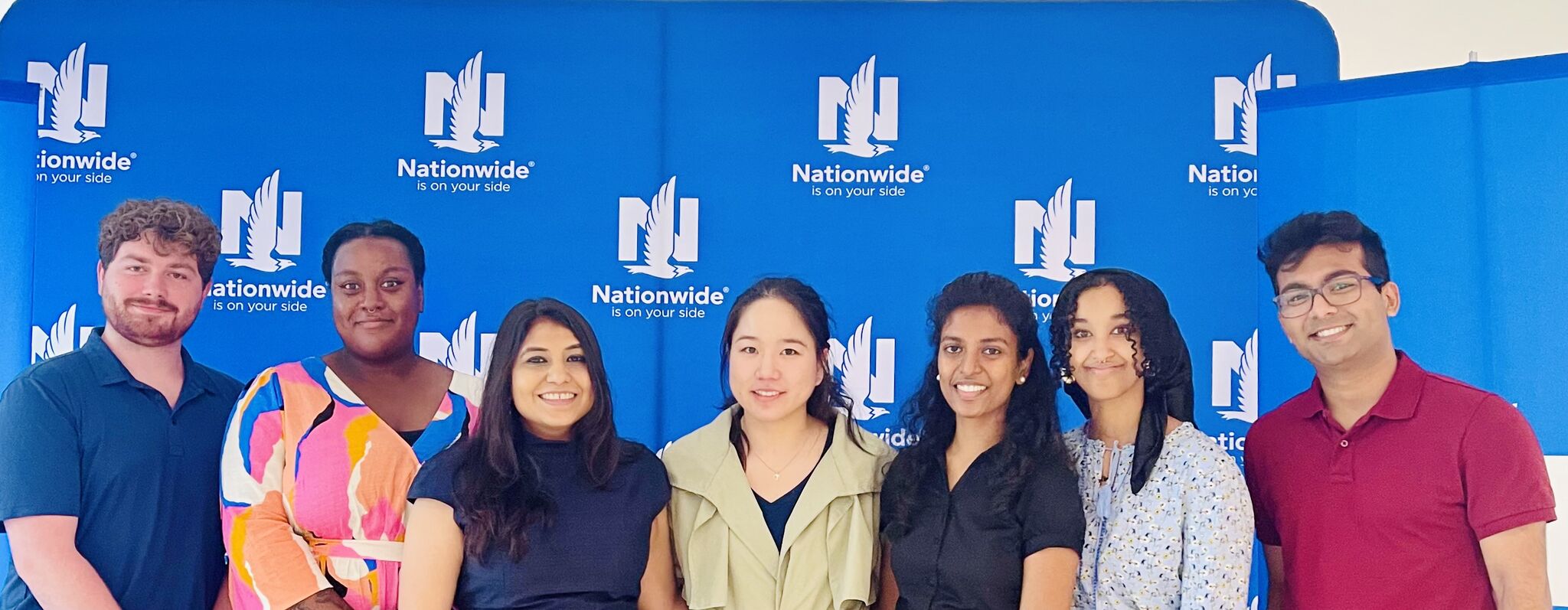
Tools and methods on the bench
Research
- Literature review
- User interviews
- Survey
- Think aloud
- Click test
- Heat map
Analysis
- Affinity mapping
- Thematic network
- Correlation
- T-test
- Storytelling
Tools
- UserZoom
- UserInterviews.com
- Figma
- FigJam
- Microsoft Office
- ChatGPT
Also at Nationwide
- Map-based repair discoveryLed end-to-end research for an automotive repair discovery product, translating semi-structured interview findings for design, information architecture, and content strategy partners. See it live (opens in a new tab)
- NationwideFinancial.comCo-led moderated and unmoderated usability research with financial professionals, then presented audience-appropriate findings to UX, IT, business, and stakeholder teams.
What I would bring to your team
I pick the instrument for the decision, not for the deliverable. This work ended in a funding conversation, so it produced a funding case — not personas, not a journey map, not the artifact research is expected to hand over. Knowing which one the room actually needs is most of the job.